The Best Anti-Inflammatory Foods for Lung Health After 40
Introduction
Inflammation is at the heart of many of the most common health challenges adults face after 40 — and the lungs are no exception. For people living with COPD, asthma, or other chronic respiratory conditions, airway inflammation directly contributes to symptoms such as breathlessness, mucus production, and reduced lung capacity.
The encouraging news is that what you eat has a measurable impact on inflammation levels in the body. Research in nutritional science has identified a range of foods that consistently help reduce systemic inflammation — and by extension, support better lung health.
This isn’t about a fad diet or eliminating entire food groups. It’s about understanding which nutrients your lungs need most, and making sure your plate delivers them regularly.
Why Inflammation Matters for Lung Health
In COPD and similar conditions, the airways are in a state of chronic low-grade inflammation. This inflammation narrows the air passages, increases mucus production, and damages the delicate tissues responsible for gas exchange. Over time, it contributes to the progressive decline in lung function that characterizes these diseases.
Anti-inflammatory eating won’t reverse existing lung damage, but it can help slow progression, reduce the frequency and severity of exacerbations, and improve overall respiratory function. When combined with medical treatment and supplemental oxygen (like a home or portable oxygen concentrator), as prescribed, a well-chosen diet is a powerful complement to a comprehensive management plan.
Top Anti-Inflammatory Foods for Lung Health
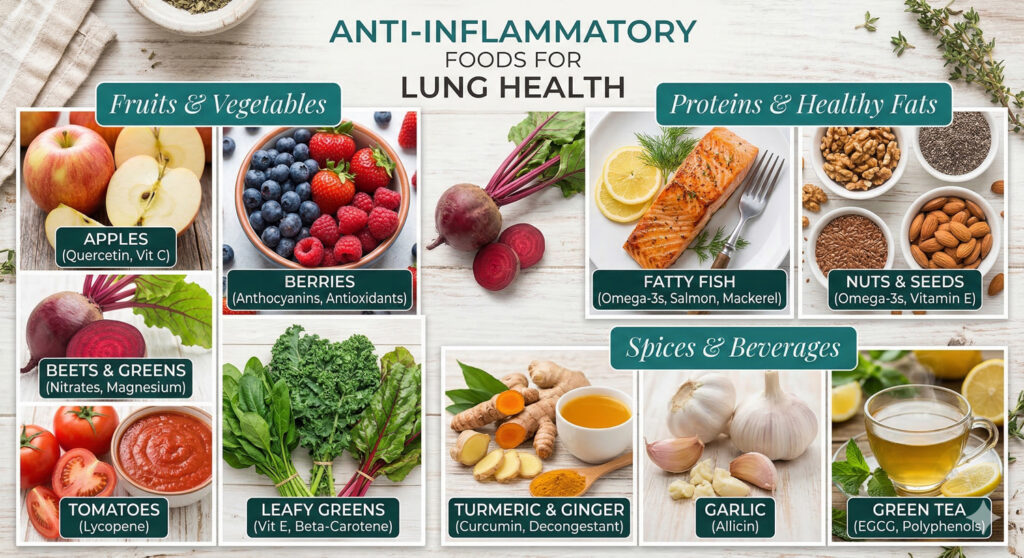
Fatty Fish (Salmon, Mackerel, Sardines, Herring): These fish are among the richest dietary sources of omega-3 fatty acids — EPA and DHA — which are among the most potent natural anti-inflammatory compounds known. Multiple studies have found associations between higher omega-3 intake and better lung function, reduced airway inflammation, and lower risk of COPD exacerbation. Aim for two servings per week. If fish isn’t your preference, a high-quality fish oil supplement can provide similar benefits.
Berries (Blueberries, Strawberries, Raspberries): Berries are loaded with flavonoids — a class of plant compounds with strong antioxidant and anti-inflammatory properties. Blueberries in particular are rich in anthocyanins, which research has linked to reduced oxidative stress in the lungs. They’re also naturally sweet, low in sugar relative to other fruits, and easy to add to smoothies, oatmeal, or yogurt.
Leafy Greens (Spinach, Kale, Swiss Chard): Dark leafy greens are nutritional powerhouses for lung health. They’re high in vitamin C — one of the most important antioxidants for the respiratory tract — as well as vitamin K, folate, and magnesium. Magnesium, in particular, plays a role in bronchodilation, helping to keep airways relaxed and open. Regular consumption of leafy greens is consistently associated with better lung function in large population studies.
Olive Oil: Extra-virgin olive oil is a cornerstone of the Mediterranean diet, one of the most studied anti-inflammatory dietary patterns in the world. It contains oleocanthal, a compound with anti-inflammatory properties similar to ibuprofen, as well as polyphenols that protect against oxidative damage. Use it for cooking, in salad dressings, or drizzled over roasted vegetables.
Turmeric: Curcumin — the active compound in turmeric — is one of the most intensively researched natural anti-inflammatory agents. Studies have shown that it can help reduce airway inflammation and may have a protective effect on lung tissue. Turmeric is easy to incorporate into soups, stews, rice dishes, and smoothies. Pairing it with black pepper significantly improves absorption.
Garlic and Onions: Both garlic and onions are rich in quercetin and sulfur-containing compounds that have demonstrated anti-inflammatory and antioxidant effects. Garlic in particular has shown promise in supporting immune function and reducing the risk of respiratory infections — a major concern for COPD patients.
Green Tea: Green tea is one of the richest dietary sources of EGCG (epigallocatechin gallate), a powerful antioxidant that has been shown to reduce inflammation in lung tissue and support immune response. Two to three cups daily is a reasonable and enjoyable way to incorporate this into a lung-supportive routine.
Nuts and Seeds (Walnuts, Flaxseeds, Chia Seeds): Walnuts are the only tree nut rich in omega-3 fatty acids, making them a valuable plant-based source of anti-inflammatory nutrients. Flaxseeds and chia seeds are similarly high in plant-based omega-3s, along with fiber that supports digestive and cardiovascular health.
Tomatoes: Tomatoes are an excellent source of lycopene, a carotenoid antioxidant that has been specifically linked to reduced airway inflammation and better lung function. Cooked tomatoes and tomato products, such as sauce or paste, contain more bioavailable lycopene than raw tomatoes, making a bowl of tomato soup a particularly lung-friendly meal.
Foods That Drive Inflammation (Worth Limiting)
To get the most out of an anti-inflammatory diet, it helps to simultaneously reduce the foods that actively promote inflammation. The biggest offenders are refined sugars and sweetened beverages, refined carbohydrates (white bread, pastries, white rice), trans fats and partially hydrogenated oils found in many packaged snack foods, processed and cured meats, and excessive alcohol.
You don’t need to be perfect — but consistently choosing whole, minimally processed foods over these alternatives makes a meaningful difference to inflammation levels over time.
Practical Tips for Building an Anti-Inflammatory Plate
Eating this way doesn’t have to be complicated. A few practical guidelines: fill half your plate with colorful vegetables and fruits at most meals, choose olive oil as your primary cooking fat, have fish two or three times a week, snack on a small handful of walnuts or almonds instead of processed snacks, drink green tea or water in place of sugary drinks, and use herbs and spices — turmeric, garlic, ginger, rosemary — liberally.
Small, consistent choices add up to significant improvements in inflammation markers and overall health over weeks and months.
Final Thoughts
Managing chronic lung disease after 40 requires a multi-pronged approach — and diet is one of the most accessible and impactful tools available. An anti-inflammatory diet rich in omega-3s, antioxidants, and phytonutrients supports lung health at the cellular level, complements medical treatment, and contributes to better energy, sleep, and overall well-being.
At 1st Class Medical, we’re committed to supporting the whole health of our customers — not just providing equipment. We hope that practical guidance like this helps you live better, breathe easier, and thrive every day.
When it comes to portable oxygen therapy, finding the perfect balance of performance, portability, and price can feel impossible. Too often, oxygen users are forced...
When you have received a COPD diagnosis, it is often followed by a prescription for medical grade oxygen. You are left feeling overwhelmed with a wealth...
Our respiratory specialists are here to help with exclusive deals, personalized recommendations, and support at every step of your journey to better breathing.



















 23Jun
23Jun














































Comments are closed